

Best Practices for Using Envelopes: Key Steps to Extend Service Life in Tyre Retreading
Industrial experience shows that the correct selection, handling, and storage of envelopes has a direct impact on costs and on the quality of the retreading process. At NOVARUB, we share technical criteria based on real plant use.
In tyre retreading, envelopes play a critical role: they are responsible for generating the pressure needed to ensure proper bonding between the pre-cured tread and the casing during the vulcanization cycle. However, they are also one of the most significant consumables within the cost structure of retreading, especially because they are reusable components whose service life depends directly on operating conditions.
Unlike other materials used once, such as the tread and cushions, envelopes are repeatedly exposed to high temperatures and high levels of stretching, the two main factors that determine premature wear. Understanding how these variables affect performance and applying good operating practices can significantly extend cycles per envelope and reduce operating costs.
Why envelopes fail: heat and stretching
During each curing cycle, the envelope expands, softens, and is subjected to significant mechanical stress. To recover its original physical properties, it is essential that the material returns fully to ambient temperature before being used again. When this does not happen and the envelope is reused while still hot, permanent stretching occurs, reducing thickness, strength, and service life.
This explains why many failures attributed to the “product” actually originate from inadequate operating conditions.
Price versus cost per cycle
When evaluating an envelope economically, the purchase price is only part of the equation. The truly relevant indicator is cost per cycle, meaning the relationship between the investment and the number of effective cycles achieved.
A higher-quality envelope, correctly sized and manufactured with compounds resistant to heat and stretching, can deliver a much higher number of cycles, more than offsetting an initial price difference. Under proper operating conditions, envelopes can exceed 250 cycles, and can achieve even higher figures in controlled scenarios.
Cooling and rotation: a key practice
Proper envelope rotation is one of the most effective practices for extending service life. Having a sufficient quantity of envelopes per size ensures that those just removed from the autoclave have the time needed to cool down evenly before returning to the process.
Production planning, statistical analysis of the most common sizes, and correct autoclave allocation help prevent premature reuse and unnecessary mixing that increases wear.
Correct storage: preventing deformation and damage
Improper storage is one of the main causes of early failures. Stacking hot envelopes, leaving them on the floor, or storing them in closed containers prevents proper heat dissipation and encourages permanent folds, cuts, or punctures.
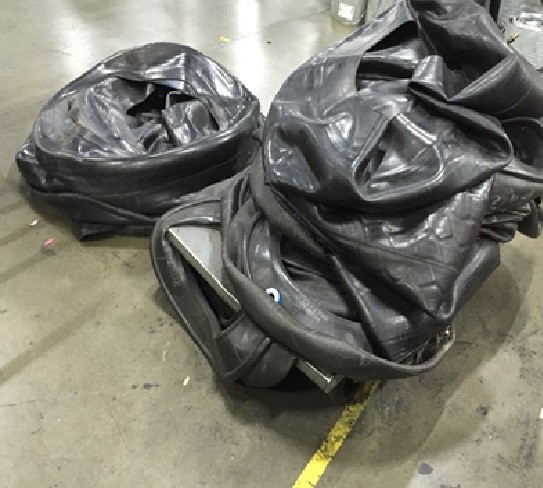
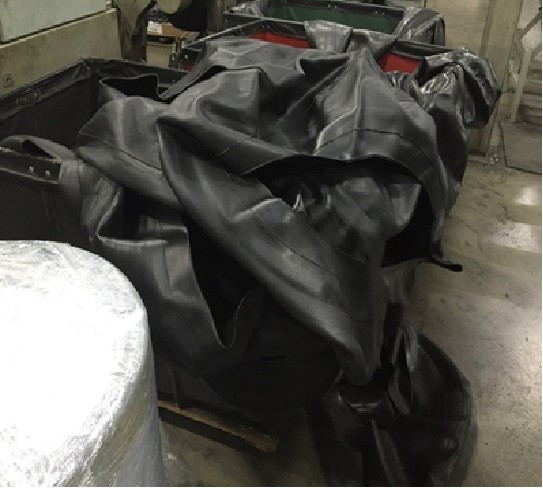
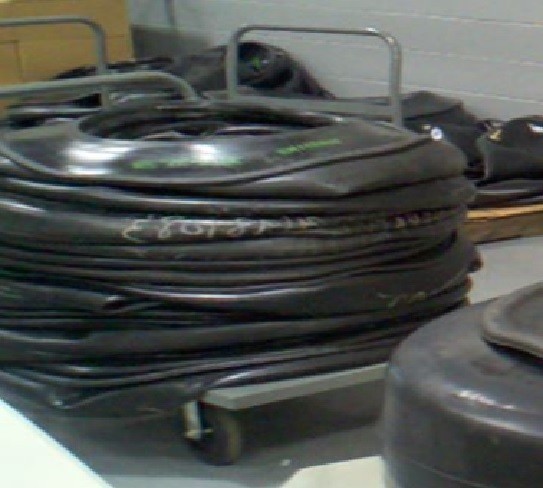
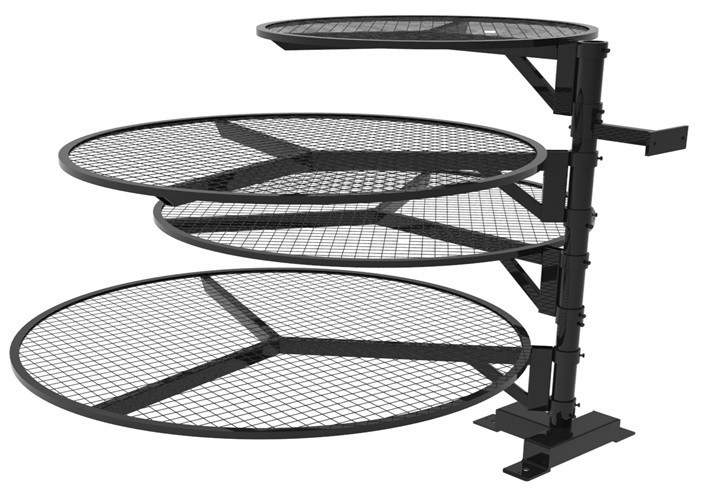
Envelopes should be stored flat, without folds, protected from light, heat, and ozone sources. In recent years, ventilated storage devices have been introduced, enabling faster and more uniform cooling and significantly improving performance.
Correct use of envelope machines
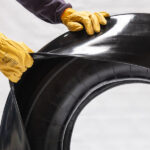
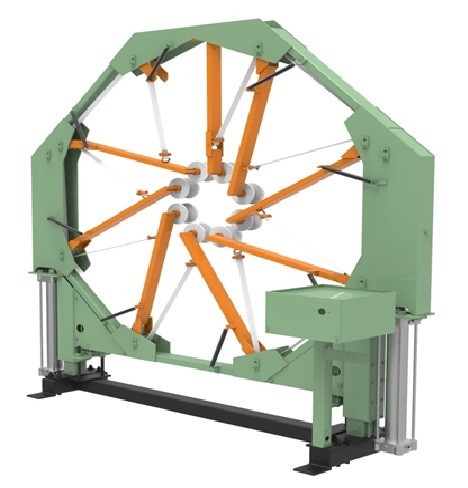
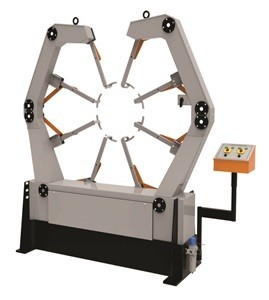
The process of fitting the envelope onto the casing should be carried out with suitable equipment that is properly adjusted. Excessive stretching during enveloping is one of the main causes of premature thinning of the material.
Envelope machines with adjustable opening and vertical movement make correct alignment easier and reduce unnecessary stress on the rubber. It is also essential to periodically check that arms, slides, and contact points do not have burrs or sharp edges that could cause cuts or tears.
Cycle tracking and removal from service
Implementing an identification and tracking system—whether through numbering, labels, or codes—makes it possible to accurately monitor the number of cycles for each envelope. This record is key to assessing real costs, detecting early failures, and defining the right time for removal from service.
An envelope should be removed when it shows irreparable damage, excessive stretching, ageing cracks, or other defects that compromise sealing or process safety.
Conclusion
An envelope’s service life depends not only on manufacturing quality, but fundamentally on how it is selected, used, cooled, stored, and tracked. Applying good operating practices improves process repeatability, reduces cost per retreaded tyre, and ensures consistent vulcanization results.