

Vulcanization Bladders: Key Criteria to Ensure Performance and Service Life
A bladder’s performance depends not only on its design or compound, but also on how it is stored, fitted, and used throughout the vulcanization process. At NOVARUB, we share technical criteria based on industrial experience to ensure reliability, repeatability, and longer service life.
In tyre manufacturing, bladders play a critical role in the vulcanization process. They act as an internal membrane that transfers pressure and temperature to the green tyre, allowing it to be formed against the mold and transformed into an elastic product that meets all design requirements.
Even and controlled transfer of pressure and temperature ensures a uniform, defect-free vulcanized tyre with shorter curing time. For this reason, bladder performance directly impacts final product quality, process stability, and plant operating costs.
While manufacturing quality is an essential starting point, industrial experience shows that a significant share of premature failures and reduced service life stems from improper storage, handling, and use.
Storage: the first preservation factor
Correct storage is key to preventing early material degradation. Bladders should be kept in cool, dry, dark environments, protected from direct sunlight, excessive heat, and humidity. Prolonged exposure to UV radiation or ozone sources can cause premature ageing, loss of elasticity, and cracking.
It is recommended to keep bladders in their original packaging or equivalent containers that protect them from dust and dirt. They should also be stored away from electric motors and equipment that generate electromagnetic fields, as these can lead to ozone formation in the surrounding air.
Regarding stacking, excessive height is not recommended, as it can create stress and cracking along folds. As a general reference, it is not advisable to stack more than 5 bladders for passenger-car tyres and no more than 3 for truck and light-commercial tyres. In many cases, vertical storage is a safer alternative to minimise deformation.
Rotation and inventory control
Another key aspect is proper stock rotation. Using bladders that are more than one year from their manufacturing date increases the risk of loss of physical properties, especially if they were not stored under controlled conditions.
Implementing a FIFO (first in, first out) system and keeping clear records of manufacturing dates helps ensure bladders are used within their optimal period, reducing failures linked to material ageing.
Handling and fitting: where many failures begin
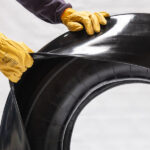
Incorrect handling is one of the most common causes of damage that is not visible to the naked eye. Bladders and their packaging should not be handled with metal objects—such as forklift tines, bars, or hooks—that can cause cuts, marks, or micro-cracks.
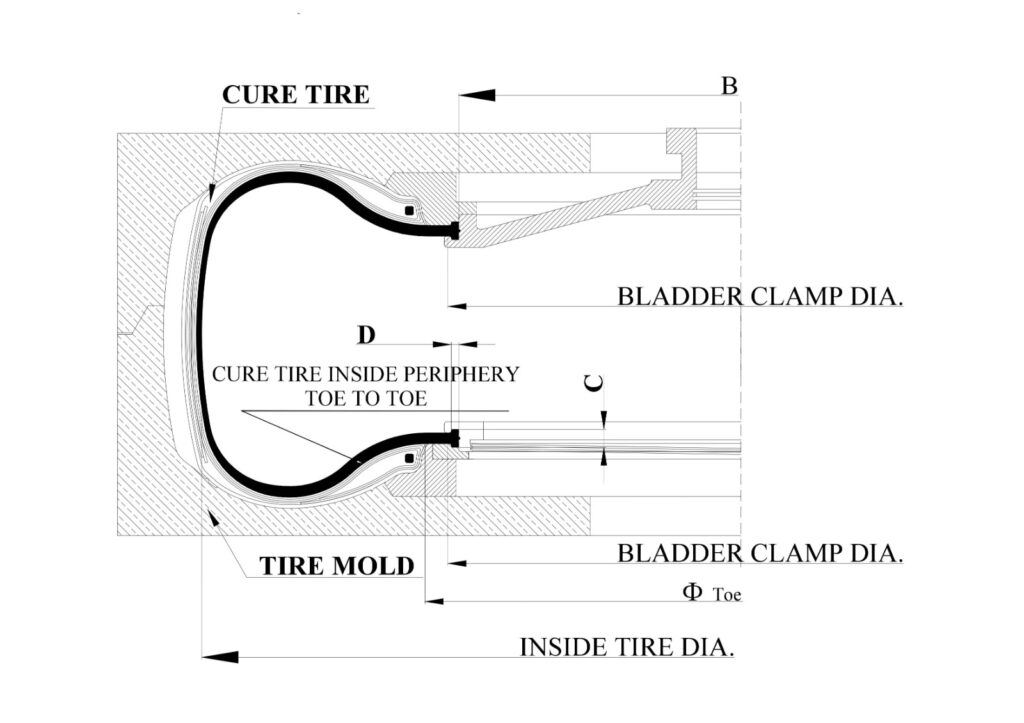
Fitting the bladder with the rings (bead rings and clamp rings) should be carried out only by trained personnel, using appropriate tools and following the manufacturer’s specifications. The bladder should be preheated to approximately 40 °C before fitting the rings. Incorrect fitting can create localised stress or damage that drastically reduces service life during operation.
The condition of the rings (bead rings and clamp rings) and their correct adjustment to the bladder bead area is another critical factor, as it can lead to premature failures that are often incorrectly attributed to other causes.
Process use: preheating, water, and lubrication
Before vulcanizing the first tyre, it is essential to preheat and stretch the bladder according to the press manual, ensuring that the inflated diameter does not exceed the diameter of the mold sidewalls. This step ensures controlled expansion and reduces unnecessary stress during curing.
If process interruptions cause the bladder to cool down, it should be preheated again before restarting production. In addition, when hot water is used as the curing medium, it is recommended to use deoxygenating additives—such as hydrazine or equivalent products—to minimise bladder deterioration.
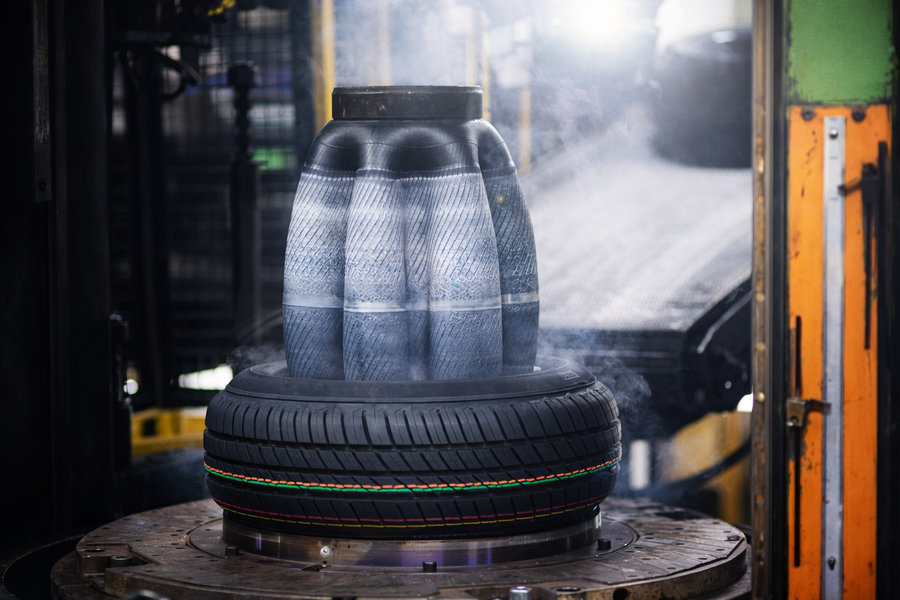
It is very important to avoid a direct jet of the curing medium as it enters the bladder, as this can cause mechanical abrasion on the inner surface. In general, modern press heads are designed to prevent this. On older presses, it may be necessary to add deflectors or modify fluid inlet holes to avoid it.
Bladder lubrication also plays an important role: using specific lubricants recommended by the manufacturer reduces friction, improves operation, and helps extend service life.
Inspection and storage after use
Regular inspection helps detect cuts, wear, or deformation before they become process failures. When a bladder is temporarily removed from production after a short run, it is recommended not to disassemble the ring set, storing it on a flat surface or hanging it in a way that does not create additional stress.
Conclusion
Bladder performance is the result of multiple factors that go far beyond the original design. Proper storage, careful handling, correct fitting, and controlled process use are fundamental technical criteria to ensure reliability, stability in vulcanization, and longer service life.