
Given the importance of tyres as a key safety component on heavy vehicles—and especially considering the specific challenges and complexity created by their weight and size—since July 2024 it has been mandatory in Europe that all newly registered vehicles (including semi-trailers) must be equipped with a TPMS (Tire Pressure Monitoring System), as established by the UN ECE R-141 European regulation.
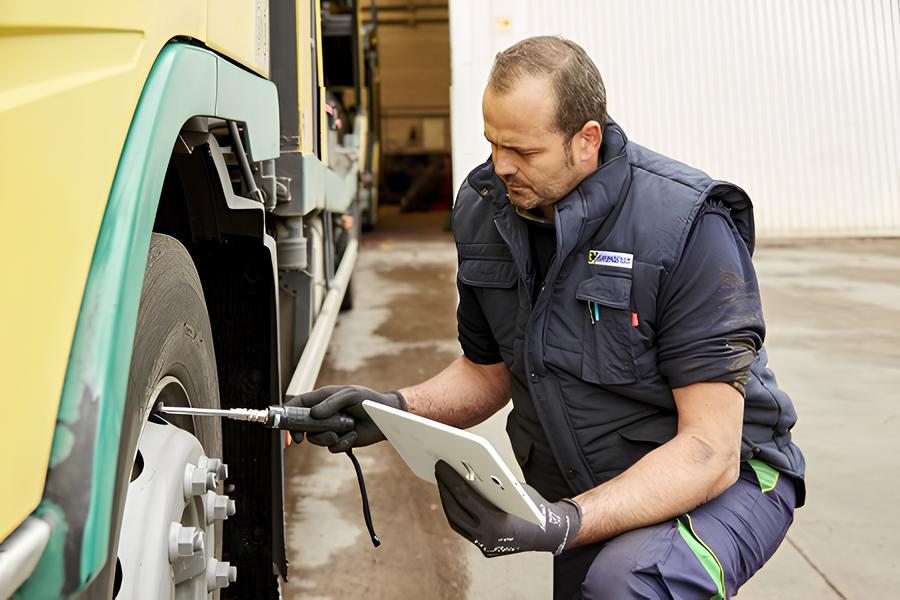
Tyres with insufficient pressure can cause not only breakdowns, but also accidents. In fact, it is important to note that 80% of puncture risks could be avoided with daily pressure checks—something the TPMS system already supports through various sensors installed within the tyre structure.
These sensors alert the driver, through a message or warning light on the dashboard display, that one of the truck or bus wheels has dropped below certain pressure thresholds (from 20% below the pressure indicated by the manufacturer, equivalent to around 0.2 bar). After this alert, the driver should check tyres, brakes, and rims. If there is visible damage or any doubt, the most advisable action is to call roadside assistance or take the vehicle to a specialised workshop.
With a focus on ensuring the safety of these vehicles, Euromaster is already prepared to provide optimal maintenance for TPMS systems in industrial vehicles—not only to support transport safety, but also to reduce tyre-related costs.
Specifically, one of the key advantages of keeping the TPMS in optimal working condition is avoiding unnecessary truck stops and the extra costs caused by downtime, which can also lead to delays in deliveries.
For all these reasons, Euromaster recommends that transport fleets and independent operators follow a proactive calendar-based programme for truck and bus maintenance and inspections, with a particular focus on everything related to tyres, including the TPMS system.
In fact, tyres have a direct and indirect impact on 40% of a company’s costs, so anticipating comprehensive tyre care can generate significant savings for transport companies.
On the one hand, more than 30% of those costs come from fuel, since a tyre in poor condition or running below the manufacturer’s recommended pressure increases consumption and therefore additional expenditure. On the other hand, tyre replacement itself accounts for around 5% of those costs.